The Retkee app, with you on the go — rated



 Martin & Tina
•
11. 02. 2026
Martin & Tina
•
11. 02. 2026
If you’re heading to Iceland these days and looking forward to the iconic walk on the endless black sand of Reynisfjara beach , you’re probably in for a shock. The famous beach you know from postcards and Instagram has changed dramatically. Strong ocean currents combined with stormy easterly winds have literally “carried” most of the sand away.
Instead of a smooth black surface, visitors are now greeted by a field of exposed rocks and boulders. What does this mean for your visit and safety?
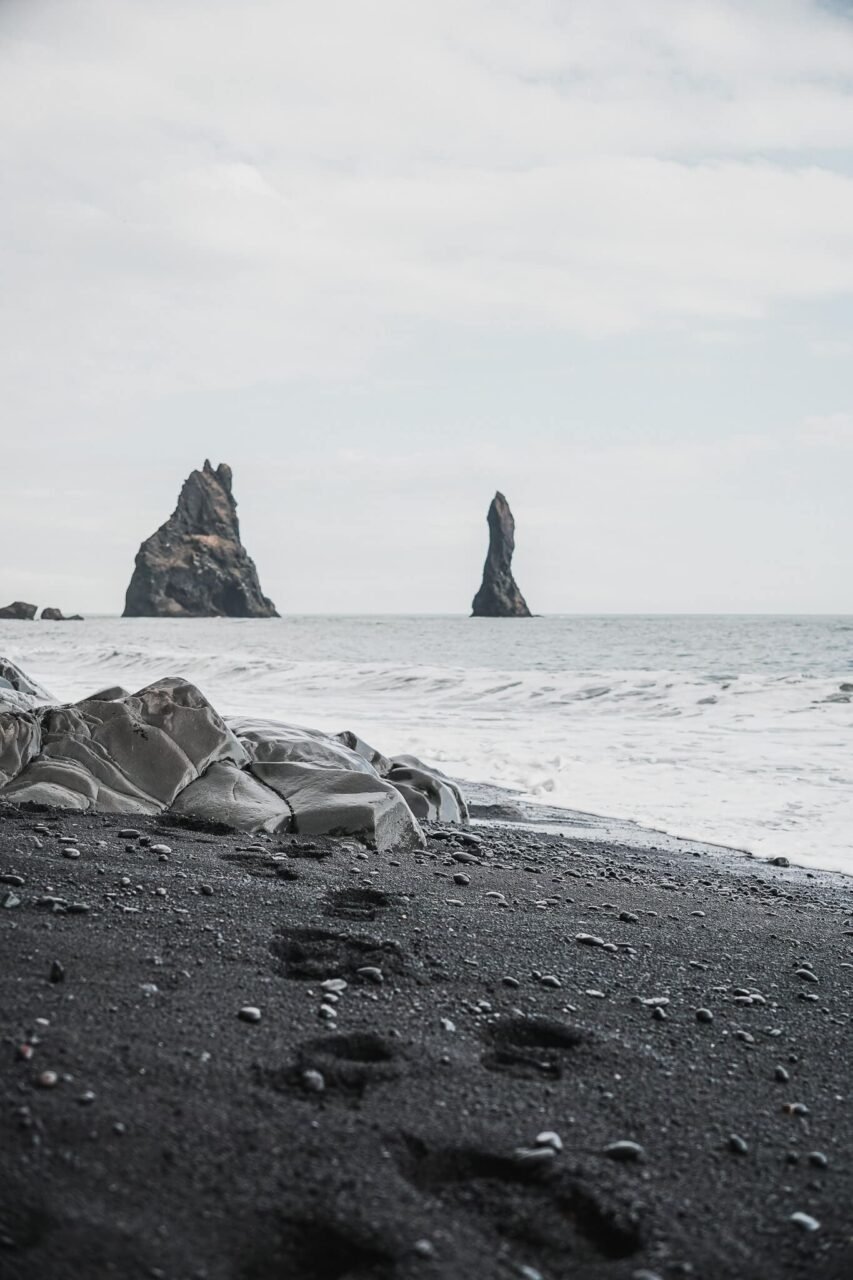
Reynisjara
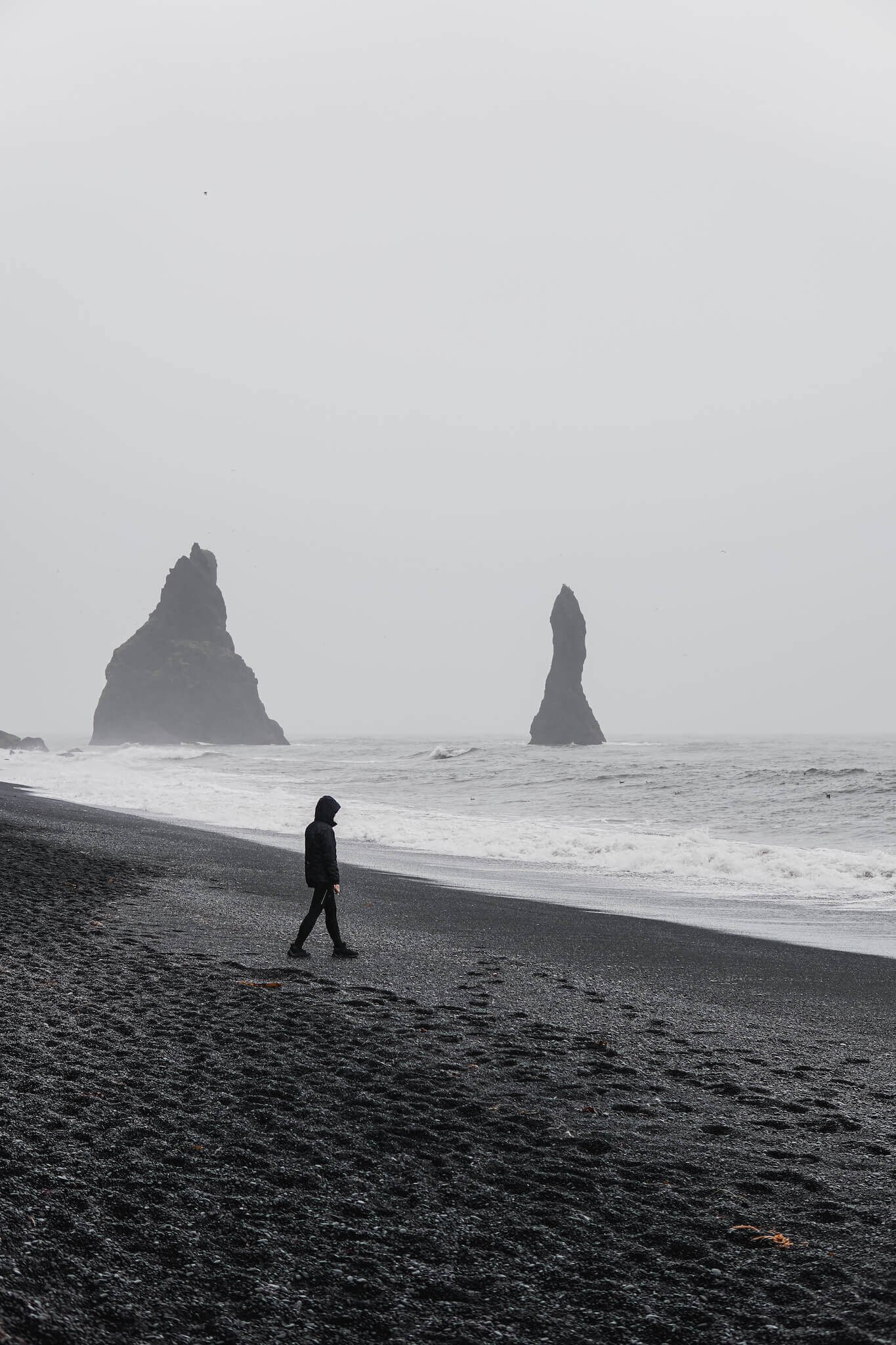
Reynisfjara beach is one of the most famous and photographed places in Iceland – a combination of black sand and beautiful cliffs. It is located in the south of the island, near the village of Vík í Mýrdal. The beach is famous for its black sand, which is made up of volcanic ash and other volcanic rocks. The beach is also known for its basalt cliffs that rise above the sea. These cliffs are called Reynisdrangar and are home to a variety of birds, including seagulls and sea eagles.
Reynisfjara is not only beautiful, but unfortunately also a very dangerous place, especially for “inexperienced” tourists. It has happened several times that sneaker waves (which can be translated as creeping waves), which appear insidiously fast and unexpectedly, dragged tourists who had their backs to the ocean and were not paying attention to this danger into the water.
But Reynisfjara is far from the only black beach in Iceland, there is another black beach nearby, basically on the border of the town of Vík, which offers similarly beautiful views and the absolute minimum of people, which unfortunately cannot be said about this more famous beach.
Show the detail
What actually happened?
This is not a man-made disaster, but the power of Icelandic nature. This phenomenon, where the sea “steals” the sand, happens cyclically on the south coast, but the current situation is extreme. The waves are now crashing directly into the famous basalt columns (Hálsanefshellir cave), which were previously safely accessible by dry foot on the sand.
TIP: Save 5% on your car rental in Iceland with our partnership with Blue Car Rental – book via this link.
As you can see in this week’s photos, authorities and local administrators had to respond and install barriers with a “Severe Hazard” warning. The sand berm that usually formed a natural barrier between the ocean and the cliffs is gone.
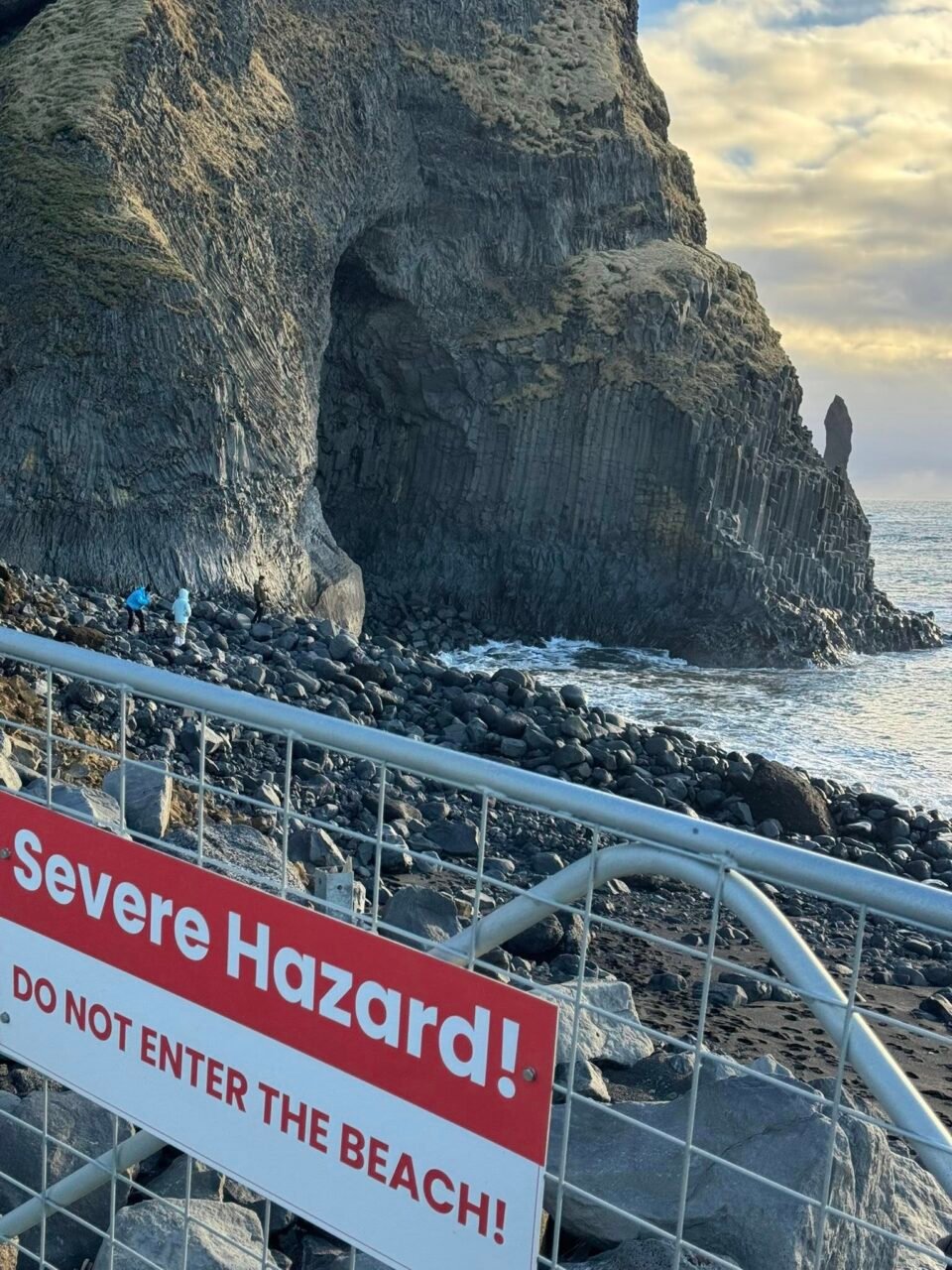
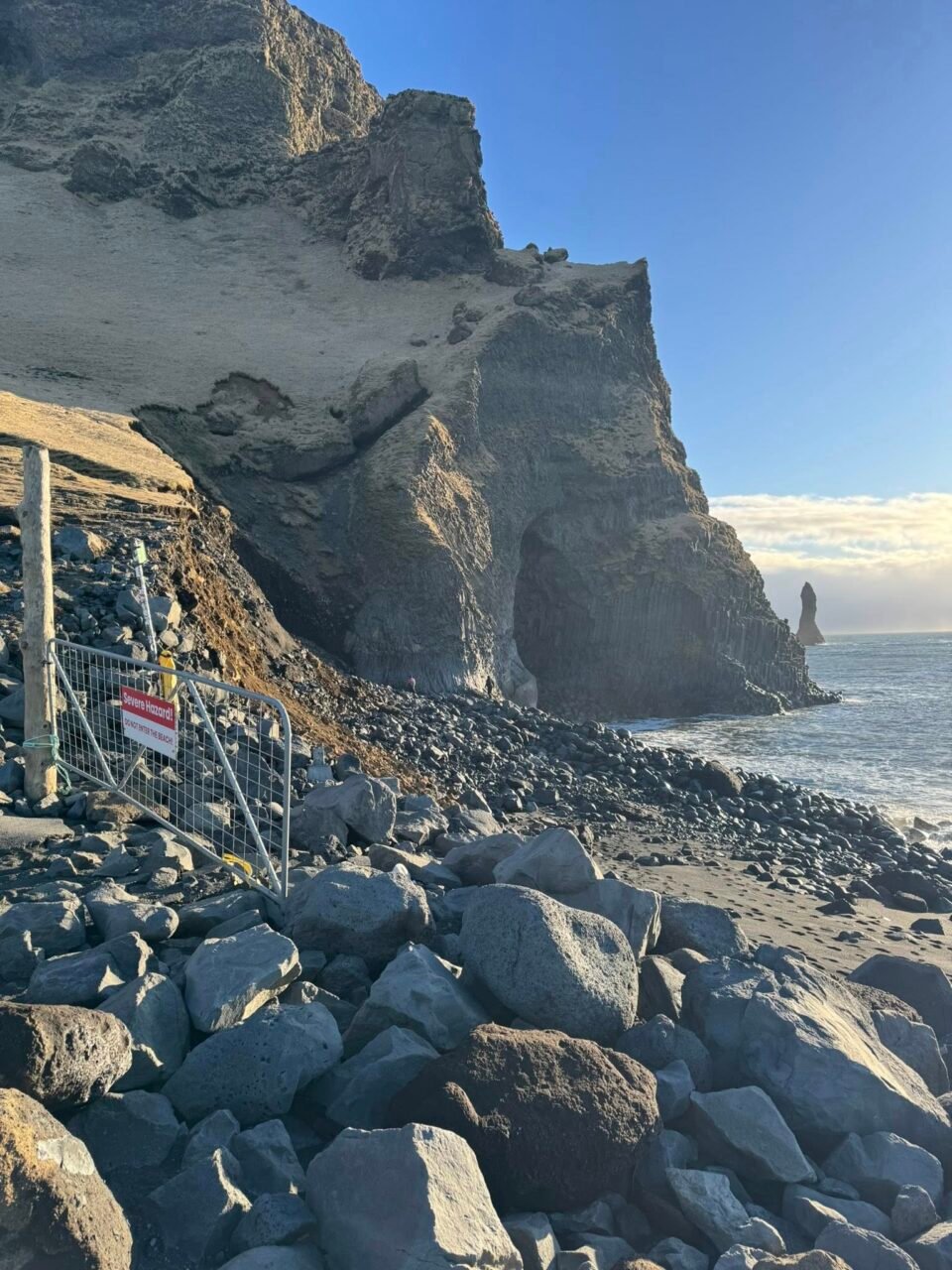
Source: Dima Balan (Reykjavik, ICELAND Travel & Vacation)
⚠️ Extreme warning: tourist trap
Reynisfjara has long been considered one of the most dangerous beaches in Iceland due to sneaker waves. These can come unexpectedly high and pull a person into the icy ocean with great force.
The current situation multiplies the risk:
- There’s nowhere to go: With the sand gone, the sea has reached the cliffs. If a bigger wave comes, you have no room to manoeuvre, nowhere to retreat.
- Unstable terrain: instead of solid sand, you walk on slippery and unstable boulders. Escaping the wave is almost impossible on such a surface.
- Respect the signs: if you see a fence or tape (as in the photo), do not go behind it. The photo is not worth the risk.
Where else to go for black sand?
Don’t worry, Iceland has black sand to spare. If Reynisfjara is inaccessible or you don’t feel safe on it, we have alternatives for you, which you can also find in our article about how Reynisfjara isn’t the only black beach in Iceland.
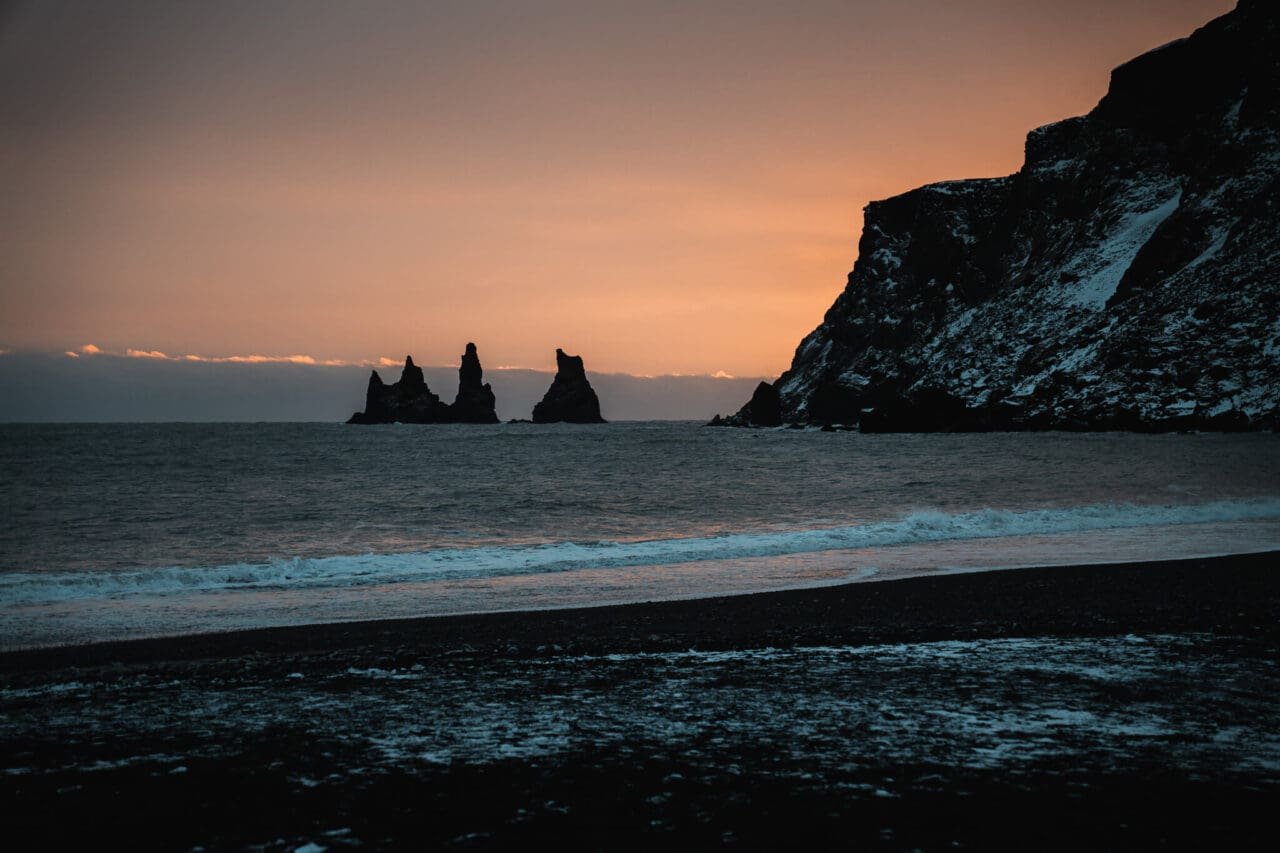
The most suitable and actually the closest alternative to Reynisfjara is the black beach right in Vík. Even from there you can see the iconic rock formations.
Plan your journey safely with Retkee
The current situation in Reynisfjara is a reminder that nature is in charge in Iceland and plans have to adapt to the conditions. To make sure you don’t get caught out, we’ve prepared detailed itineraries to guide you to the best places (including alternatives). Explore the beauty of the south coast, for example.
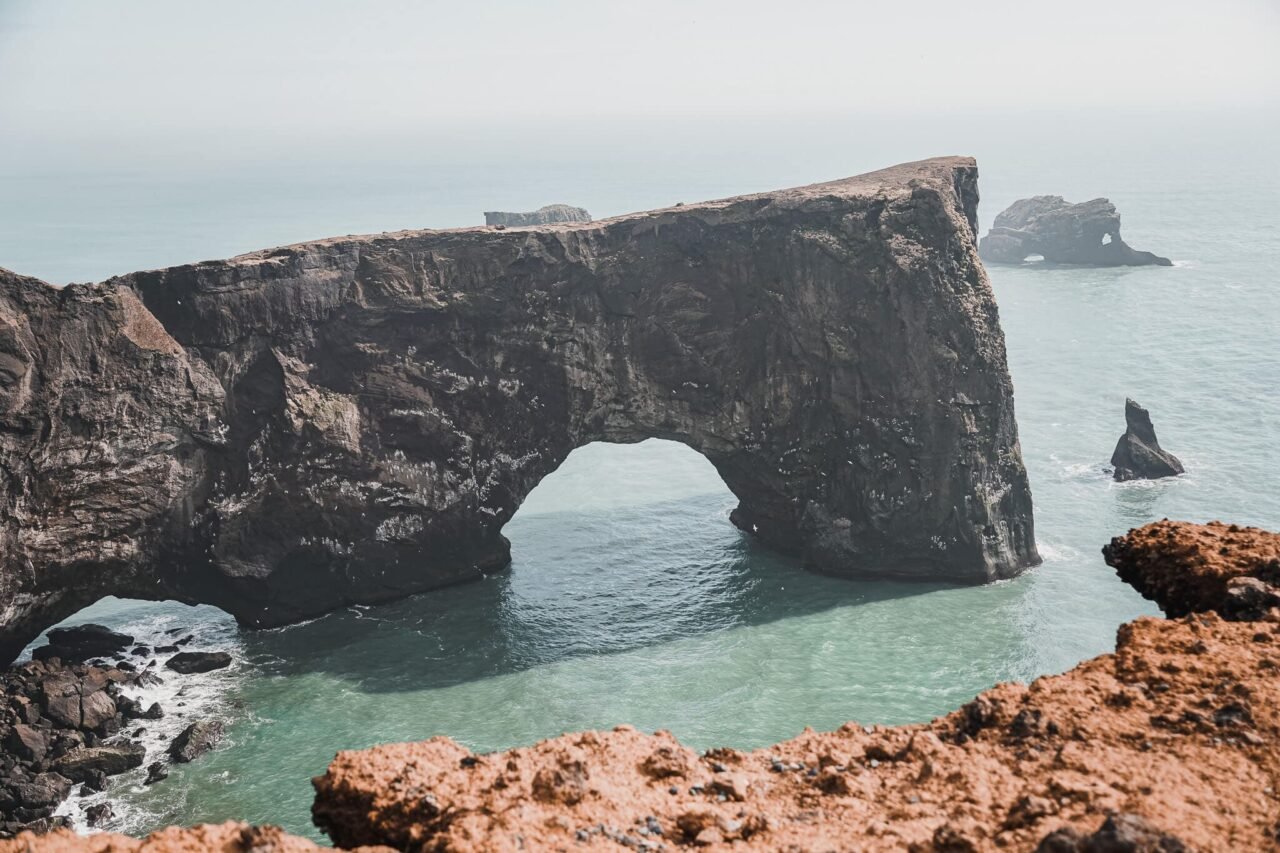
Discover the beauty of South Iceland
Show guide
Be careful, follow the alerts on Safetravel.is and enjoy the wild beauty of Iceland with respect!